
Masjid al-Haram, often called the Grand Mosque or the Great Mosque of Mecca, is the holiest site in Islam and the largest mosque in the world. It surrounds the Kaaba, the structure Muslims face during their five daily prayers, and it is the destination of both Hajj and Umrah, two of the most significant journeys a Muslim can undertake. For millions of pilgrims and visitors each year, understanding what Masjid al-Haram is – and what to expect when standing before it – is often the first step in preparing for a trip to Makkah.
This guide covers the mosque’s history, what it contains, its scale, and practical information for travelers planning to visit.
What Is Masjid al-Haram?
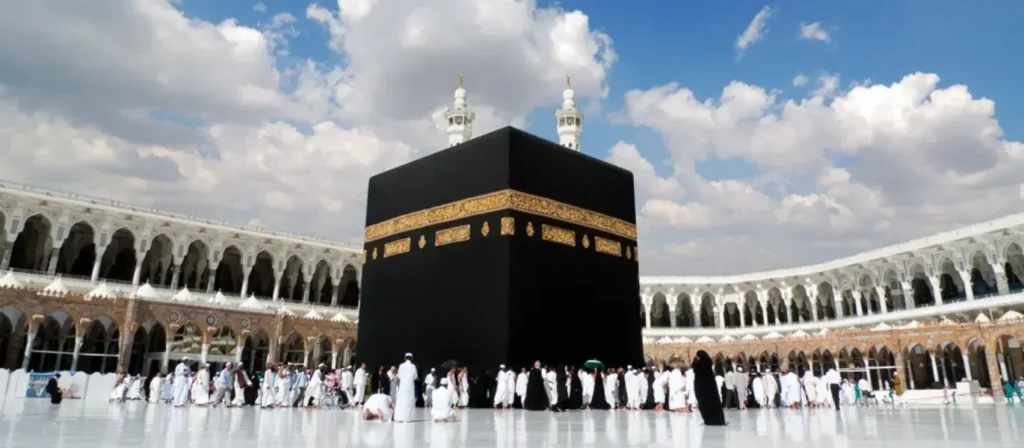
Masjid al-Haram translates roughly to “the Sacred Mosque.” It is the largest mosque in the world and surrounds Islam’s holiest place, the Kaaba, in the city of Makkah. Muslims around the world face the direction of the Kaaba – known as the Qibla – during their daily prayers, wherever they are in the world.
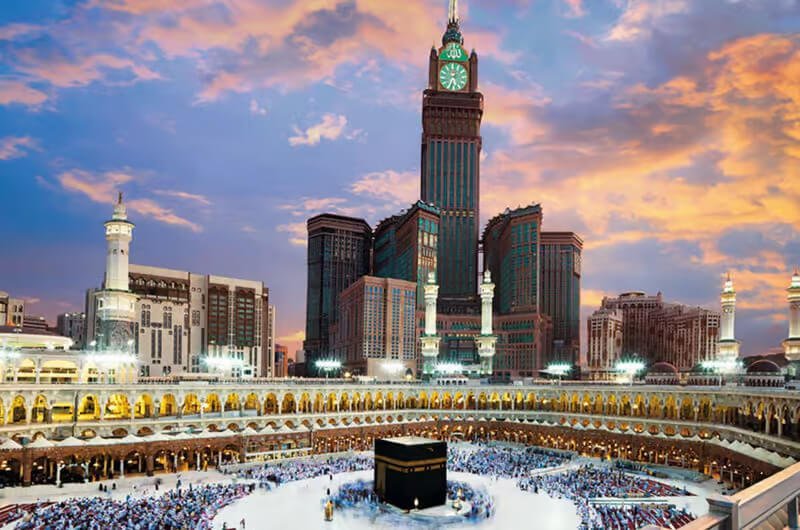
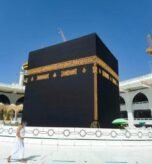
At the center of the mosque’s vast courtyard stands the Kaaba, a cuboid structure draped in black cloth embroidered with gold calligraphy (the Kiswah). Around it, the mosque complex has grown over centuries into a multi-level structure capable of holding millions of worshippers during peak pilgrimage periods.
The History of Masjid al-Haram
The Foundation by Prophet Ibrahim and Ismail
According to Islamic tradition, the foundation of Masjid al-Haram as a religious center traces back to the time of Prophet Ibrahim, who, along with his son Isma’il, is believed to have built the Kaaba as a place of worship dedicated to the one true God. The early structure was open and unroofed, designed primarily for worship by the small community around Ibrahim.
Early Islamic Expansion
The mosque as it exists today took shape well after this early period. Documented construction history is generally traced to the 7th century, under the guidance of Caliph Umar ibn al-Khattab, who recognized that the growing number of pilgrims required a larger, more structured space around the Kaaba. Subsequent Islamic dynasties continued to expand and improve the mosque over the following centuries.
Ottoman and Modern-Era Renovations
The mosque has been rebuilt and expanded multiple times throughout its history. It faced setbacks including fire and flood damage in the 14th century, and in 1571 Ottoman Sultan Selim II commissioned significant renovation work. In the modern era, the Saudi government has carried out some of the largest expansions in the mosque’s history, adding multiple floors, expanded courtyards, air conditioning, and modern crowd-management infrastructure to accommodate the growing number of pilgrims performing Hajj and Umrah each year.
What’s Inside Masjid al-Haram
Several sacred sites sit within or immediately around the mosque’s central courtyard, known as the Mataf – the open area where pilgrims perform Tawaf, the ritual of circling the Kaaba seven times.
The Kaaba
The Kaaba sits at the physical and spiritual center of the mosque. It is a cuboid-shaped building, with each side measuring approximately 12 meters in height and 10 to 12 meters in length, constructed from granite stone and clad in a black silk cloth embroidered with gold. Muslims do not worship the Kaaba itself; rather, it serves as the focal point representing the unity of Muslims worldwide in prayer.
The Black Stone (Hajar al-Aswad)
Set into the eastern corner of the Kaaba is the Black Stone, a revered relic that pilgrims aim to touch or kiss during Tawaf if conditions allow, following the tradition of the Prophet Muhammad ﷺ.
Maqam Ibrahim (Station of Ibrahim)
Located a short distance from the Kaaba, this is traditionally identified as the stone on which Prophet Ibrahim stood while building the Kaaba’s upper sections. Pilgrims often pray two rakats near this station after completing Tawaf.
The Zamzam Well
The Zamzam Well is one of the most visited features within the mosque complex. Its water is considered blessed, and pilgrims commonly drink it after completing Tawaf and Sa’i. Modern facilities distribute Zamzam water throughout the mosque via dedicated coolers and stations.
Mount Safa and Mount Marwa
These two small hills, now enclosed within the modern mosque structure, are the site of Sa’i – the ritual walk performed between them, commemorating Hajar’s search for water for her son Ismail. A covered, air-conditioned corridor connects the two points today, making the ritual accessible in all weather conditions.
How Big Is Masjid al-Haram?
Masjid al-Haram has grown dramatically from its original open-air courtyard into a sprawling, multi-level complex. It is widely regarded as the largest mosque in the world, with a capacity that expands significantly during peak Hajj and Umrah seasons to accommodate the surge in visitors. The mosque today includes multiple prayer floors, extended courtyards, and surrounding plazas, along with modern additions such as escalators and climate control to help manage the flow of worshippers. Because expansion projects are ongoing and capacity figures are periodically updated by Saudi authorities, travelers planning around specific crowd levels should check current figures from official sources closer to their travel dates.
The Gates and Minarets of Masjid al-Haram
The mosque is accessed through a large number of named gates, each historically associated with a person, tribe, or direction. Some of the most well-known and frequently used gates include:
| Gate Name | Notable Feature |
|---|---|
| King Abdul Aziz Gate | One of the main entry points |
| King Fahad Gate | Major modern entrance |
| King Abdullah Gate | Major modern entrance |
| Al Safa Gate | Leads toward the Safa–Marwa area |
| Al-Salam Gate | Traditionally used for entry near the Mataf |
| Umar Al Farouk Gate | Named after Caliph Umar ibn al-Khattab |
| Ajyad, Bilal, Hunain, Ismail, Hamza, Ali, and Abbas Gates | Additional named entrances around the perimeter |
The mosque also features multiple minarets rising above its courtyards, a visual landmark visible from much of central Makkah. Because gate numbering and access routes can be adjusted during peak seasons or renovation phases, pilgrims should follow current on-the-ground signage and official guidance rather than relying solely on older gate maps.
Why Masjid al-Haram Is Significant in Islam
Masjid al-Haram’s importance in Islam is difficult to overstate:
- It houses the Kaaba, the Qibla toward which all Muslims pray five times daily.
- It is the required destination for Hajj, one of the Five Pillars of Islam.
- It is the primary site for Umrah, performed throughout the year.
- Prayers performed within the mosque are traditionally held to carry immense spiritual reward compared to prayers performed elsewhere.
- It represents a point of unity for Muslims from every nationality, culture, and background, all facing the same direction in worship.
For many visitors, the moment of first seeing the Kaaba upon entering the mosque – often described as an intensely emotional experience – is one of the defining moments of their Umrah or Hajj journey.
Recommended: Al Masjid al-Nabawi
Visiting Masjid al-Haram: What Travelers Should Know
Etiquette and What to Expect
Visitors should dress modestly, and those in a state of Ihram must observe its specific restrictions. Photography is generally discouraged in the most sacred areas immediately around the Kaaba out of respect for worshippers focused on prayer and ritual. Given the volume of pilgrims, especially during Ramadan and Hajj season, movement through the Mataf and surrounding areas is often guided by crowd-control staff, and patience is essential.
Best Times to Visit
The mosque is open continuously, and prayer times draw the largest crowds. Travelers seeking a quieter experience for Tawaf sometimes aim for late night or pre-dawn hours outside of the five daily prayer windows, though during Ramadan and Hajj, the mosque remains busy around the clock. First-time visitors should build extra time into their schedule, since distances within the expanded mosque complex, combined with crowd volume, can make movement slower than expected.
Getting to Masjid al-Haram
Most international pilgrims arrive in Saudi Arabia through King Abdulaziz International Airport (JED) in Jeddah, which is the primary gateway for Umrah travelers, or through Prince Mohammad Bin Abdulaziz International Airport in Madinah for those beginning their trip with a visit to the Prophet’s Mosque.
From Jeddah Airport
The journey from Jeddah to Masjid al-Haram covers roughly 70–80 kilometers, typically taking a little over an hour by road depending on traffic and time of day. Because pilgrims often arrive after long international flights, carrying luggage and sometimes traveling with family or elderly relatives, many prefer a private, direct transfer rather than navigating shared transport or public buses immediately after landing. A private vehicle also allows flexibility around prayer times and Ihram requirements en route.
If you’re arriving into Jeddah and need a private, door-to-door transfer straight to your hotel in Makkah, Zukhruph Transport offers private Jeddah Airport to Makkah transfers using comfortable vehicles, including GMC and Mercedes-Benz options depending on your group size and availability. You can reach the team directly on WhatsApp at +966574915372 or through zukhruphtransport.com.
From Madinah
Travelers who begin their trip in Madinah and later head to Makkah typically cover a route of around 400–450 kilometers between the two cities. This is a longer journey, and many pilgrims – particularly families, groups, or those with significant luggage – prefer a private intercity transfer over shared coach travel, since it allows rest stops, flexibility for prayer breaks, and a more comfortable pace for the trip. Zukhruph Transport also provides private Madinah to Makkah transportation for travelers who prefer this option.
FAQs
1. What does Masjid al-Haram mean?
Masjid al-Haram means “the Sacred Mosque” or “the Sanctuary Mosque.” It refers to the Grand Mosque in Makkah that surrounds the Kaaba.
2. Is Masjid al-Haram the largest mosque in the world?
Yes, it is widely recognized as the largest mosque in the world, encompassing the Kaaba, the Mataf area, multiple prayer floors, and expanded courtyards.
3. What is inside Masjid al-Haram?
The mosque contains the Kaaba, the Black Stone (Hajar al-Aswad), Maqam Ibrahim, the Zamzam Well, and the Safa–Marwa walkway, along with multiple prayer levels and courtyards.
4. Can non-Muslims visit Masjid al-Haram?
No. Entry to Makkah and Masjid al-Haram is restricted to Muslims. This is enforced by Saudi authorities at checkpoints on the roads leading into the city.
5. How far is Masjid al-Haram from Jeddah Airport?
The distance is approximately 70–80 kilometers, with travel time typically a little over an hour depending on traffic and route.
6. How many gates does Masjid al-Haram have?
The mosque has a large number of named gates, including well-known ones such as King Abdul Aziz Gate, King Fahad Gate, and King Abdullah Gate. Exact configurations and numbering can change with renovation projects, so current signage should be followed on-site.
7. What is the best time to visit Masjid al-Haram to avoid crowds?
Late-night or pre-dawn hours outside the five daily prayer windows are generally quieter, though during Ramadan and Hajj the mosque remains busy at nearly all hours.
8. Do I need to be in Ihram to enter Masjid al-Haram?
If you are entering Makkah with the intention of performing Umrah or Hajj, you must be in a state of Ihram before crossing the designated boundary (Miqat). Simply visiting without performing a ritual does not always require Ihram, but pilgrims should confirm their specific situation with a knowledgeable source before traveling.
9. What is the Mataf?
The Mataf is the open circular area immediately surrounding the Kaaba where pilgrims perform Tawaf, the ritual of circling the Kaaba seven times.
10. How do I get from Madinah to Masjid al-Haram in Makkah?
The road distance is roughly 400–450 kilometers. Options include shared buses, trains where available, or private transfer services, which many families and groups prefer for comfort and flexibility.
11. Is photography allowed inside Masjid al-Haram?
Photography is generally discouraged, especially in the areas immediately around the Kaaba, out of respect for worshippers. Visitors should be mindful of local guidance and signage.
12. Who manages Masjid al-Haram today?
The mosque is managed by the General Presidency for the Affairs of the Grand Mosque and the Prophet’s Mosque, the Saudi state body responsible for its operations, renovations, and pilgrim services.
2 Comments
Umrah Guide: How to Perform Umrah Step by Step (2026)
Sep 27, 2026[…] is often called the “lesser pilgrimage” – a shorter, simpler visit to Masjid al-Haram in Makkah that can be performed at any time of the year, unlike Hajj, which happens on fixed dates. […]
Masjid Jurana Makkah Guide: History, Miqat Status & Location
Sep 27, 2026[…] Masjid al-Haram itself, Ji’ranah lies outside the sacred precinct, which is precisely what allows it to […]