
Al Masjid al-Nabawi – the Prophet’s Mosque – is the second holiest site in Islam and the spiritual heart of Madinah. Built by Prophet Muhammad ﷺ himself shortly after his migration from Makkah in 622 CE, it has grown from a small mud-brick structure into one of the largest mosques on earth, capable of holding well over a million worshippers at peak times. For most visitors to Saudi Arabia, whether performing Umrah, Hajj, or simply visiting Madinah, standing beneath its famous Green Dome is one of the most anticipated moments of the entire journey.
This guide covers the mosque’s history and religious significance, what to see inside and around it, and the practical details you need to plan a smooth visit – including how Rawdah bookings work today and how travelers typically get to Madinah from Jeddah or Makkah.
What Is Masjid al-Nabawi?
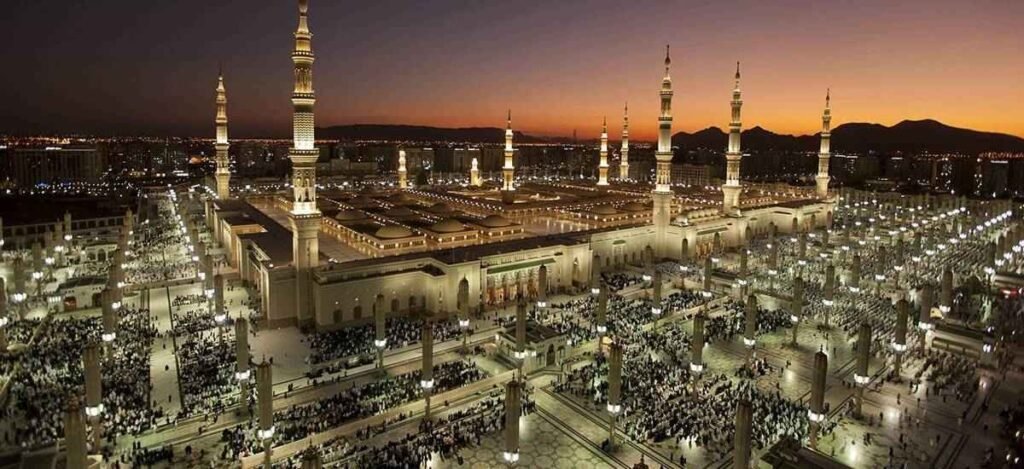
Masjid al-Nabawi sits at the center of Madinah, in what was historically the heart of the city. It is always open to worshippers, regardless of the hour, and functions as far more than a place of prayer – it houses the tomb of the Prophet ﷺ, along with those of his companions Abu Bakr al-Siddiq and Umar ibn al-Khattab, beneath the unmistakable Green Dome.
The mosque’s roots go back to the very founding of the Muslim community in Madinah. After the Prophet ﷺ arrived in the city following his migration from Makkah, he purchased a plot of land and, together with his companions, built the first version of the mosque with his own hands. What began as a modest courtyard of palm trunks and sun-dried mud brick has since been rebuilt and enlarged more than a dozen times by successive caliphs, sultans, and Saudi kings, each expansion reflecting the growing size of the Muslim world.
The Spiritual and Religious Significance
Prayer in Masjid al-Nabawi carries exceptional merit in Islamic tradition. A well-known hadith recorded in Sahih al-Bukhari states that a single prayer offered here is worth a thousand prayers offered elsewhere, with the sole exception of Masjid al-Haram in Makkah. Classical scholars such as Imam al-Nawawi and Ibn Hajar al-Asqalani treated this narration as establishing the mosque’s elevated status among all others. Visiting the mosque and sending salutations to the Prophet ﷺ – known as ziyarah – is considered a deeply meritorious act, distinct from the obligatory rites of Hajj but treasured by pilgrims all the same.
The Rawdah (Riyad ul-Jannah)
Within the mosque lies a small but extraordinarily significant area known as the Rawdah, or Riyad ul-Jannah (“Garden of Paradise”). It stretches from the Prophet’s former house – now his tomb – to his pulpit (minbar). The name comes from a hadith in which the Prophet ﷺ described the space between his house and his pulpit as one of the gardens of Paradise. Pilgrims try, whenever possible, to offer voluntary prayers within this specific area, and it remains the single most sought-after spot inside the entire mosque.
The Prophet’s Tomb and the Green Dome
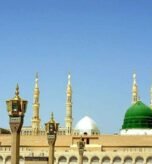
In the mosque’s south-eastern corner stands the Green Dome, the most recognizable landmark in Madinah. Beneath it lies the burial chamber of the Prophet ﷺ, enclosed by walls and a grille so that the grave itself is not visible from any vantage point. The dome dates back to the late 13th century, when it was first built in wood; it wasn’t painted its now-iconic green until the 19th century.
A Brief History – From a Mud-Brick Mosque to a Global Landmark
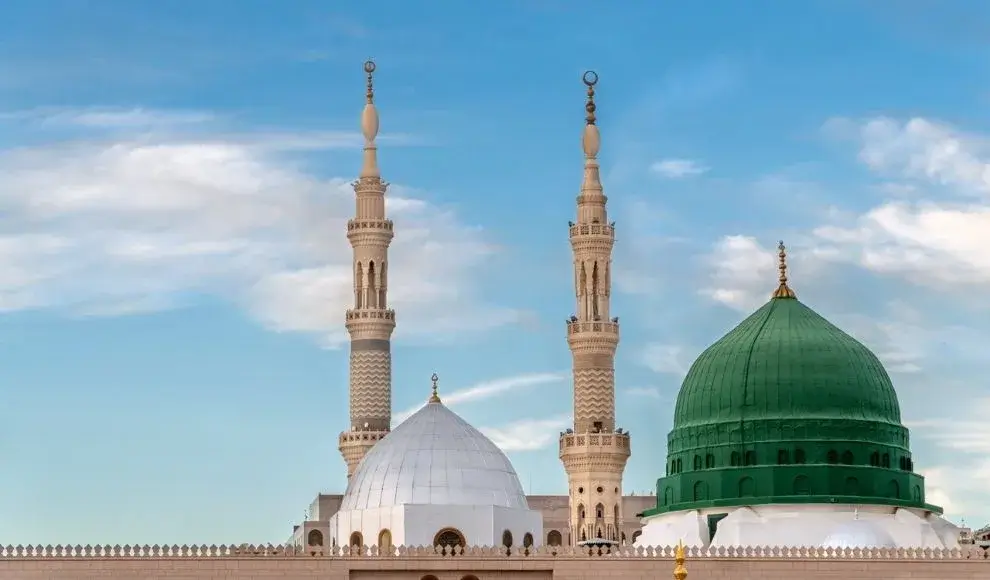
The Original Mosque Built by the Prophet ﷺ
The first mosque, completed within a matter of months in 622 CE, was a simple rectangular enclosure with walls of mud brick, a roof of palm branches over part of the courtyard, and columns made from palm trunks. It served not only as a place of prayer but as a school, a courthouse, a place to receive foreign delegations, and a shelter for the poor – functions that would only gradually be absorbed by separate civic buildings centuries later.
Key Expansions Through the Centuries
Over the following centuries, the mosque was rebuilt and enlarged repeatedly. The early caliphs Umar and Uthman each oversaw major extensions using more durable stone and imported timber. The Umayyad caliph al-Walid ibn Abd al-Malik brought the Prophet’s tomb within the mosque’s walls for the first time and introduced its first minarets. Two devastating fires, in the 13th and 15th centuries, forced substantial rebuilding, and it was after the second of these that the wooden dome over the tomb was first constructed. The Ottomans, particularly Sultan AbdulMejid I in the mid-19th century, carried out one of the most extensive renovations in the mosque’s history, and much of the ornate calligraphy visible on the southern Qibla wall today dates from that period.
The Modern Saudi Expansions
Since the founding of the Kingdom of Saudi Arabia, the mosque has undergone several transformative expansions to accommodate the rapidly growing number of pilgrims. The most significant, completed in the 1990s under King Fahd, added vast prayer halls, a marble-paved surrounding courtyard, retractable umbrellas, minarets reaching over 100 metres, and an extensive underground infrastructure for air conditioning, parking, and utilities. Further expansion work has continued in the years since, aimed at eventually accommodating well over a million worshippers across the mosque and its courtyards combined.
What to See Around Masjid al-Nabawi
Jannat al-Baqi
Immediately beside the mosque’s eastern wall lies Jannat al-Baqi, a historic cemetery where a large number of the Prophet’s companions and family members are buried. It remains an active burial ground and a place many visitors pause at for reflection, though it typically has restricted visiting hours and is usually only open to men.
Masjid Quba and Nearby Historic Mosques
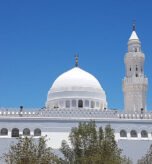
A short distance from the Prophet’s Mosque stands Masjid Quba, recognized as the first mosque built in Islamic history, along with several other historically significant mosques scattered around Madinah. Many pilgrims combine a Ziyarat tour with their visit to Masjid Nabawi to take in these sites in a single trip.
Planning Your Visit: Practical Information
Visiting Hours and Access
Masjid al-Nabawi never closes – it remains accessible around the clock, seven days a week. That said, the mosque is at its busiest around the five daily prayers and especially during Ramadan and the Hajj season, when courtyard capacity, queueing, and crowd-management measures are more pronounced. If you prefer a quieter, more contemplative visit, arriving well outside the immediate prayer windows generally helps.
How to Book a Rawdah Visit (Nusuk App)
Entry to the Rawdah is managed through timed appointments booked via the official Nusuk app, and visiting hours and procedures can be adjusted by the authorities from time to time, so always check the app for the latest details before you travel. In general terms, men and women are given separate visiting windows through different gates, sessions run for a limited period, and a digital QR-code permit is issued once your slot is confirmed. Because Rawdah slots can fill up quickly, especially during busier seasons, it’s worth checking the app regularly in the days before your planned visit and saving your permit for offline access, since mosque Wi-Fi and mobile signal can be unreliable in the crowds.
What to Wear and Etiquette
Modest dress is expected throughout the mosque complex. Men typically wear loose, modest clothing, while women are expected to wear a full-length, loose-fitting abaya with the hijab secured. Strong perfume is not permitted inside the mosque, and photography is generally restricted, particularly within the Rawdah itself. As with any place of worship, calm, respectful behavior is expected at all times, especially near the tomb area.
Can Non-Muslims Visit?
Masjid al-Nabawi, like Masjid al-Haram in Makkah, is generally reserved for Muslims. Non-Muslim visitors are not permitted to enter Madinah’s central Haram zone or the mosque itself; this is worth being aware of ahead of any trip that includes non-Muslim family members or travel companions.
Getting to Masjid al-Nabawi
From Prince Mohammad Bin Abdulaziz International Airport (MED)
Most international pilgrims and tourists arrive at Prince Mohammad Bin Abdulaziz International Airport, located a short drive from central Madinah and the mosque itself. After a long international flight, and often with luggage, a private transfer directly to your hotel near the Haram is usually the most comfortable option, avoiding the wait times and multiple stops that can come with shared transport.
From Jeddah or Makkah
Many travelers arrive into King Abdulaziz International Airport in Jeddah first, particularly during Umrah season, and then continue on to Madinah – either flying onward, taking the Haramain High-Speed Railway, or travelling by road. The same applies for pilgrims moving between Makkah and Madinah as part of a combined Umrah itinerary. Road travel between these cities covers a significant distance across the Hijaz region, so exact timing depends on traffic, route, and stops – it’s worth checking current conditions closer to your travel date. For families, groups, or anyone travelling with a lot of luggage, a private vehicle door-to-door is often more comfortable than juggling connections between flights, trains, and taxis.
If you’d rather not manage these connections yourself, Zukhruph Transport offers private transfers between Jeddah, Makkah, and Madinah, as well as direct airport-to-hotel transfers on arrival into Madinah, using a range of vehicles suited to solo travelers, families, and larger groups. You can reach the team directly on WhatsApp at +966574915372 or through zukhruphtransport.com to check routes and availability.
Where to Stay Near the Mosque
Madinah’s hotel district is concentrated in the streets immediately surrounding Masjid al-Nabawi, with properties ranging from simple budget stays to five-star hotels, many offering direct views of the mosque’s courtyard. Staying within walking distance is worth prioritizing where possible, since it lets you reach the mosque easily for each of the five daily prayers without relying on transport within the city itself.
FAQs
1. What does “Masjid al-Nabawi” mean?
It means “the Prophet’s Mosque” in Arabic, referring to the mosque founded and built by Prophet Muhammad ﷺ in Madinah.
2. Is Masjid al-Nabawi open 24 hours a day?
Yes. Unlike most mosques, it remains open to worshippers around the clock, every day of the year.
3. Do I need a permit to enter Masjid al-Nabawi itself?
General entry to the mosque does not require a special permit, though a specific booking is required to enter the Rawdah area, made through the Nusuk app.
4. How do I book a Rawdah visit?
Through the official Nusuk app, where you select an available time slot for your gender, receive a QR-code permit, and present it at the designated gate. Availability and exact procedures can change, so it’s best to check the app close to your travel dates.
5. Can non-Muslims visit Masjid al-Nabawi?
No. Entry to the mosque and Madinah’s central Haram area is restricted to Muslims.
6. How far is Masjid al-Nabawi from the airport?
It’s a relatively short drive from Prince Mohammad Bin Abdulaziz International Airport (MED) to the mosque and the surrounding hotel district – most arriving pilgrims are at their hotel within around 20–30 minutes, traffic permitting.
7. What should I wear to visit the mosque?
Modest, loose-fitting clothing. Women are expected to wear a full abaya with the hijab secured; strong perfume should be avoided.
8. Where is the tomb of the Prophet Muhammad ﷺ?
Beneath the Green Dome, in the mosque’s south-eastern corner, alongside the graves of his companions Abu Bakr al-Siddiq and Umar ibn al-Khattab.
9. What is Jannat al-Baqi and can I visit it?
It’s a historic cemetery adjacent to the mosque where many of the Prophet’s companions and family members are buried. It has limited visiting hours and is generally only open to men.
10. How do people usually travel between Jeddah, Makkah, and Madinah?
Common options include the Haramain High-Speed Railway, domestic flights, buses, and private transfers, depending on budget, luggage, and group size. Families and groups often prefer a private vehicle for a more direct, door-to-door journey.
11. Is Masjid Quba worth visiting alongside Masjid Nabawi?
Yes – it’s recognized as the first mosque built in Islamic history and is a short trip from central Madinah, often included as part of a Ziyarat tour.
12. When is the mosque busiest?
Around the five daily prayer times, and especially during Ramadan and the Hajj season, when visitor numbers rise significantly.
2 Comments
Masjid al-Haram: Complete Guide to the Grand Mosque of Makkah
Sep 25, 2026[…] Recommended: Al Masjid al-Nabawi […]
Umrah Guide: How to Perform Umrah Step by Step (2026)
Sep 27, 2026[…] significant sites such as Jabal al-Nour, Jabal Thawr, and the Qiblatain Mosque in Madinah, Masjid an-Nabawi, the Rawdah, and Baqi cemetery. These visits aren’t part of Umrah itself but are a meaningful […]